
experiments in ink making
EXPERIMENT 1: BLACK WALNUT INK.
It was a rainy day in October 2023 when my daughter first picked up a black walnut (see video below). The video stops before we see that whatever she picked up is leaking a pungent black liquid all over her hands. After a thorough hand washing and a quick google, we learned she had found a Black Walnut. I remembered that monks used to make ink out of walnuts (thanks art history classes!) and thought to myself “I could do that.” We spent the next few weeks gathering husks from the side of the road (strangely, we never could locate the tree) until we had a stock pot half full of them. Then it was just a matter of letting them sit for awhile. Add water, let them soak for awhile, breaking up the waterlogged husks at some point. Remove the chunks, strain it, boil it down, filter it, bottle it. The first batch was just over a gallon of warm medium brown ink.

A pot half full of Black Walnut husks.
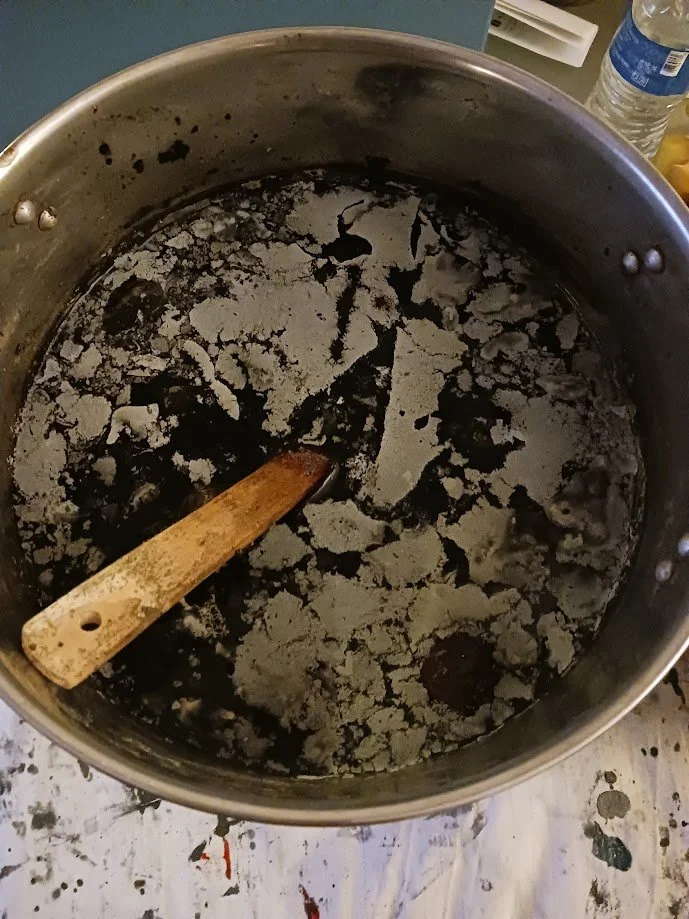
Chunky, moldy walnut water.

The final yield was just over a gallon. I still have .95 gallons left 3 years later.

First batch of Black Walnut ink (details above) compared to first batch of Pomegranate ink (see below). Image is something appropriately weird and medieval I traced with a lightbox.
EXPERIMENT 2: POMEGRANATE INK.
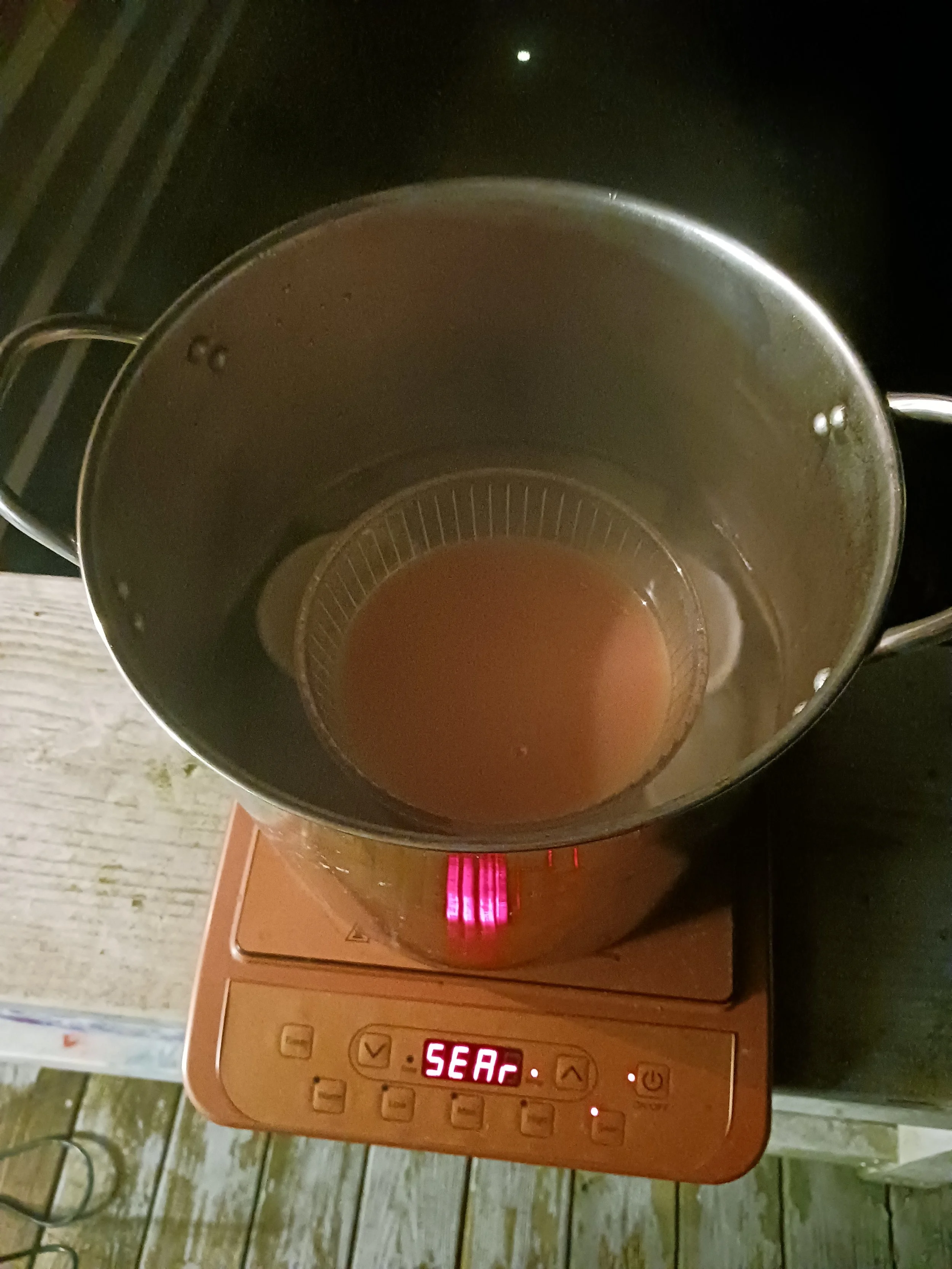
Snag some pomegranate husks from work before they go in the trash. Soak diced pomegranate rinds in water for 2 months. Once you get sternly reminded that there’s some kind of gross science experiment living on your kitchen counter, it’s time to strain it and reduce it by half. EXCEPT! you can’t use any metal because the tannic acid will react and ruin whatever iron-based metal it comes in contact with. So after a very long time in a janky Bain Marie, set up outside because the smell is pretty funky, add Ferrous Sulfate. It’s basically powdered rust. It turned into a dark grey ink immediately that dried even darker. I managed to film the final step of that process.
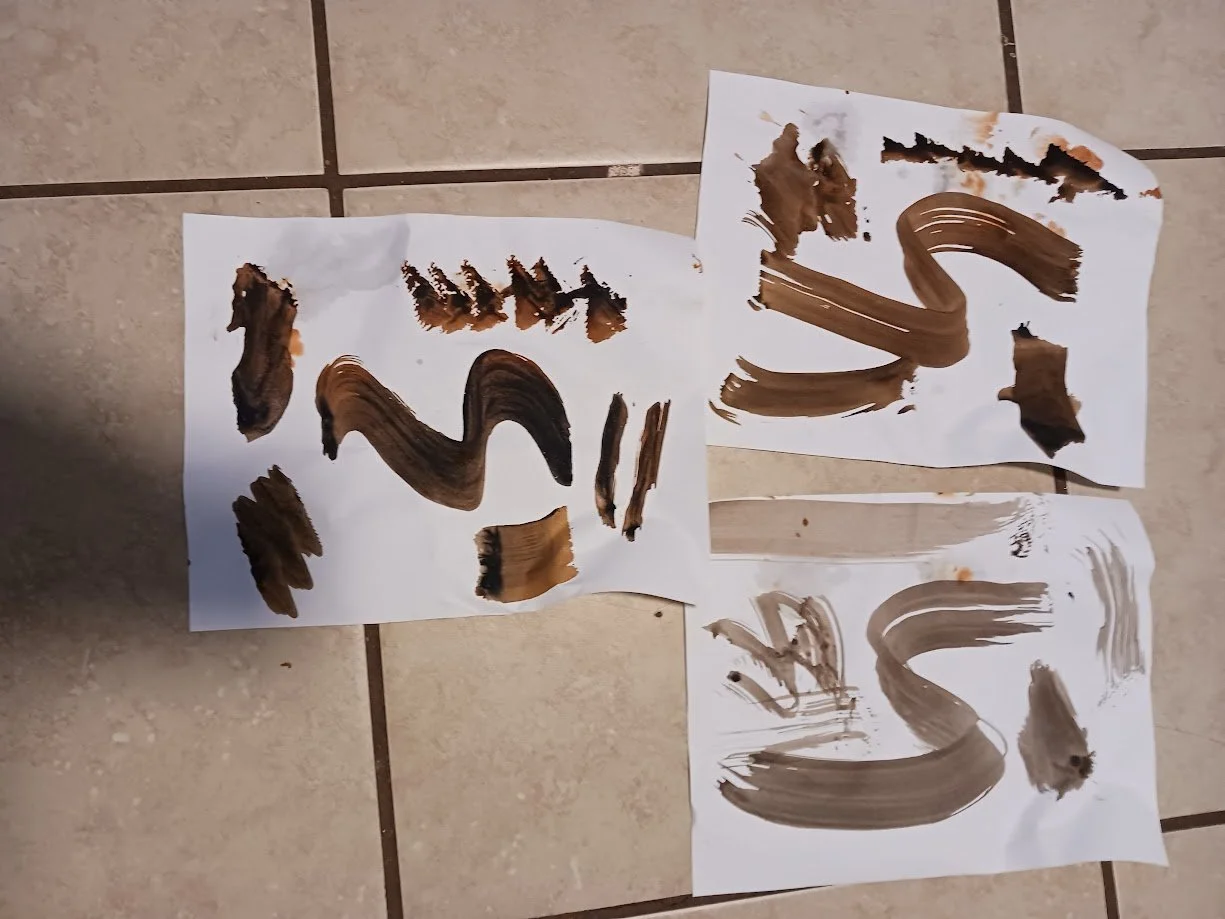
quality test of a 2nd batch of pomegranate ink. I added extra Ferrous Sulfate to the sample to see how dark I could make it. It was black at first, but then resolved into this cool rusty look. It looks rusty because it is rust! No idea what that would do to the paper long term.
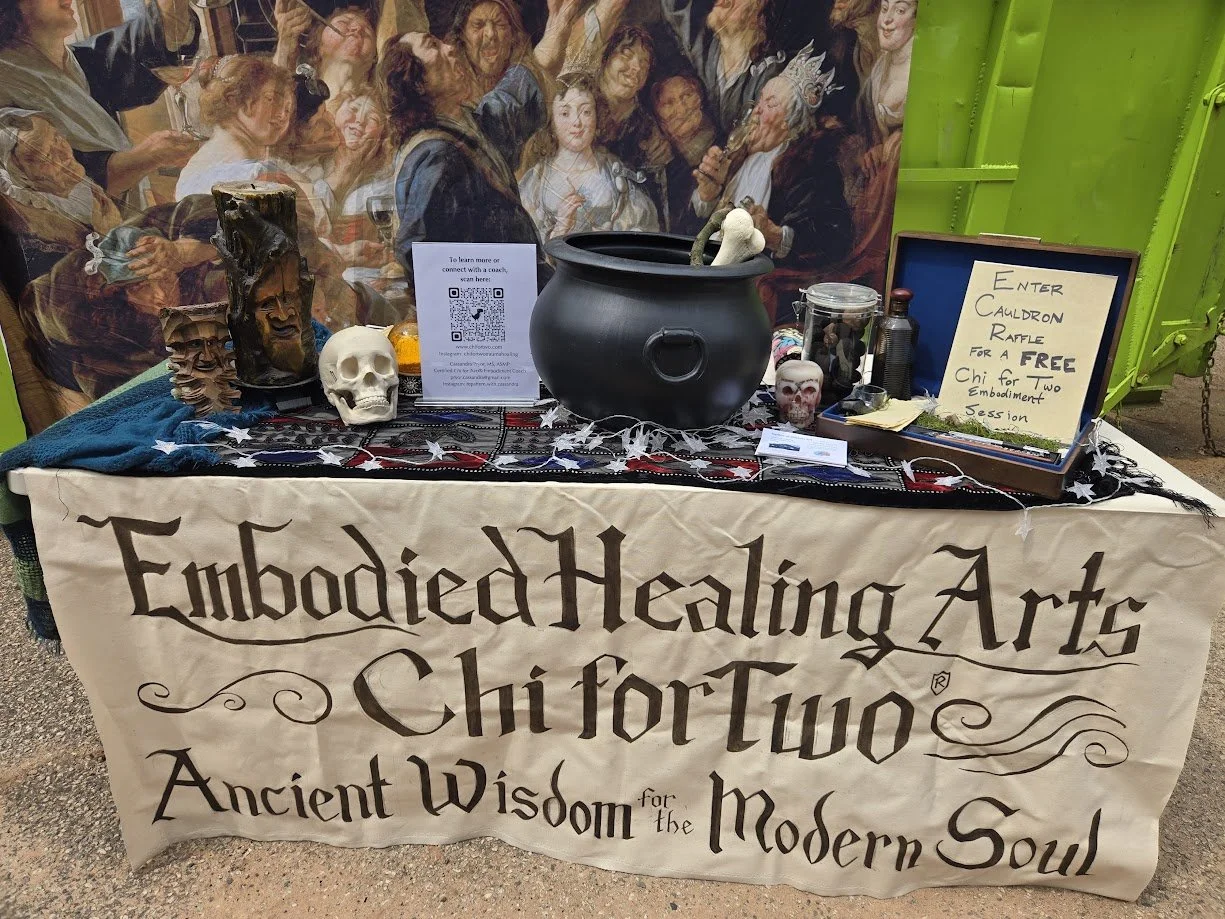
Ink from a 2nd batch of Black Walnut that came out much darker. Sign is untreated canvas.